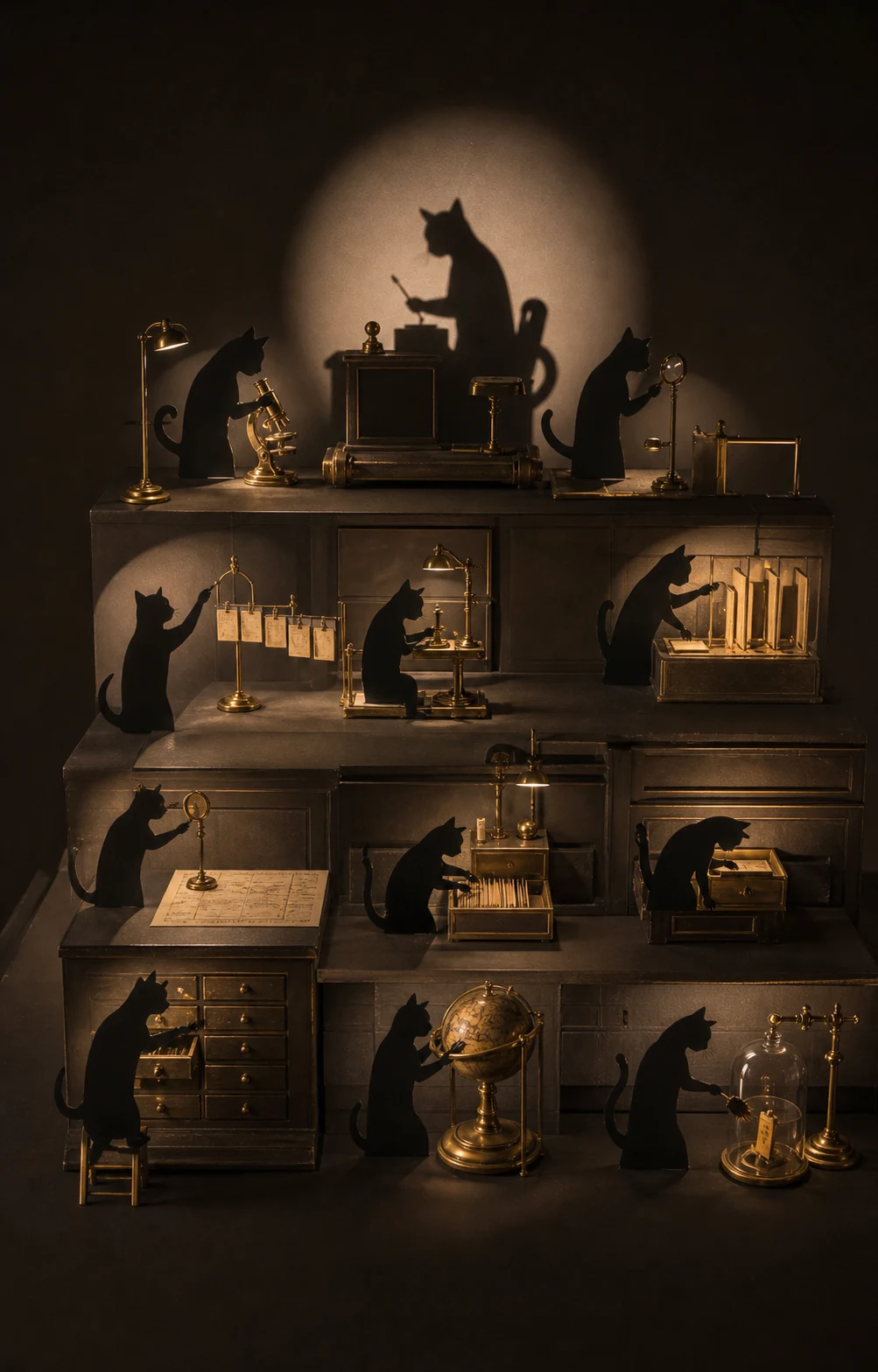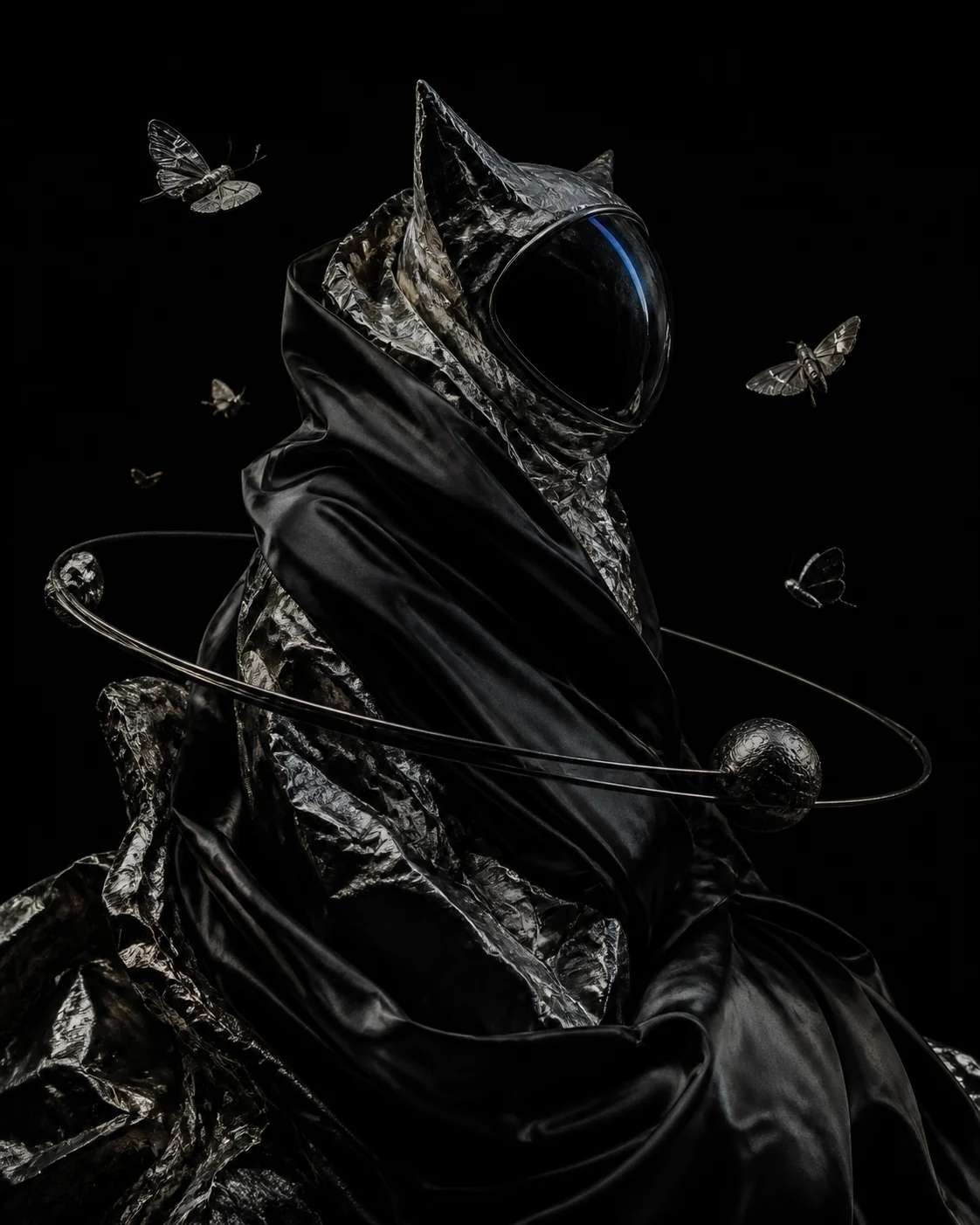
The first cat in space does not look through the window with heroic awe. It watches a loose reflection crawl across the instrument panel, waits, and places one paw exactly where the phantom light will arrive.
That gesture changes the mythology of exploration. Human space stories favor forward motion: plant the flag, cross the threshold, name the object. A cat introduces another intelligence—the intelligence of remaining still until a pattern exposes itself. The cabin becomes less a vehicle than a territory under patient investigation.
A spacecraft designed around attention. A feline cabin would have no single command chair. It would offer protected ledges at several heights, warm observation pockets, short routes between secure surfaces and panels that tolerate touch without interpreting every contact as an instruction. The design problem is not adding cat-shaped decoration; it is admitting that competence can inhabit a body with different rhythms.
Loose objects would be dangerous, yet total sterility would be its own mistake. Curiosity needs harmless things to test. A fabric tab, a changing shaft of light and a viewport placed near the floor could become part of the mission architecture. What looks like play is environmental sampling performed without a clipboard.
The closed hatch is not an obstacle to a cat. It is a theory demanding peer review.
The fantasy finally asks what exploration is for. If discovery means possession, the cat is an absurd astronaut. If it means noticing what disciplined adults have learned to ignore, the animal may be the most qualified creature aboard. The first report sent home would contain no triumphant speech—only the coordinates of a moving shadow everyone else missed.