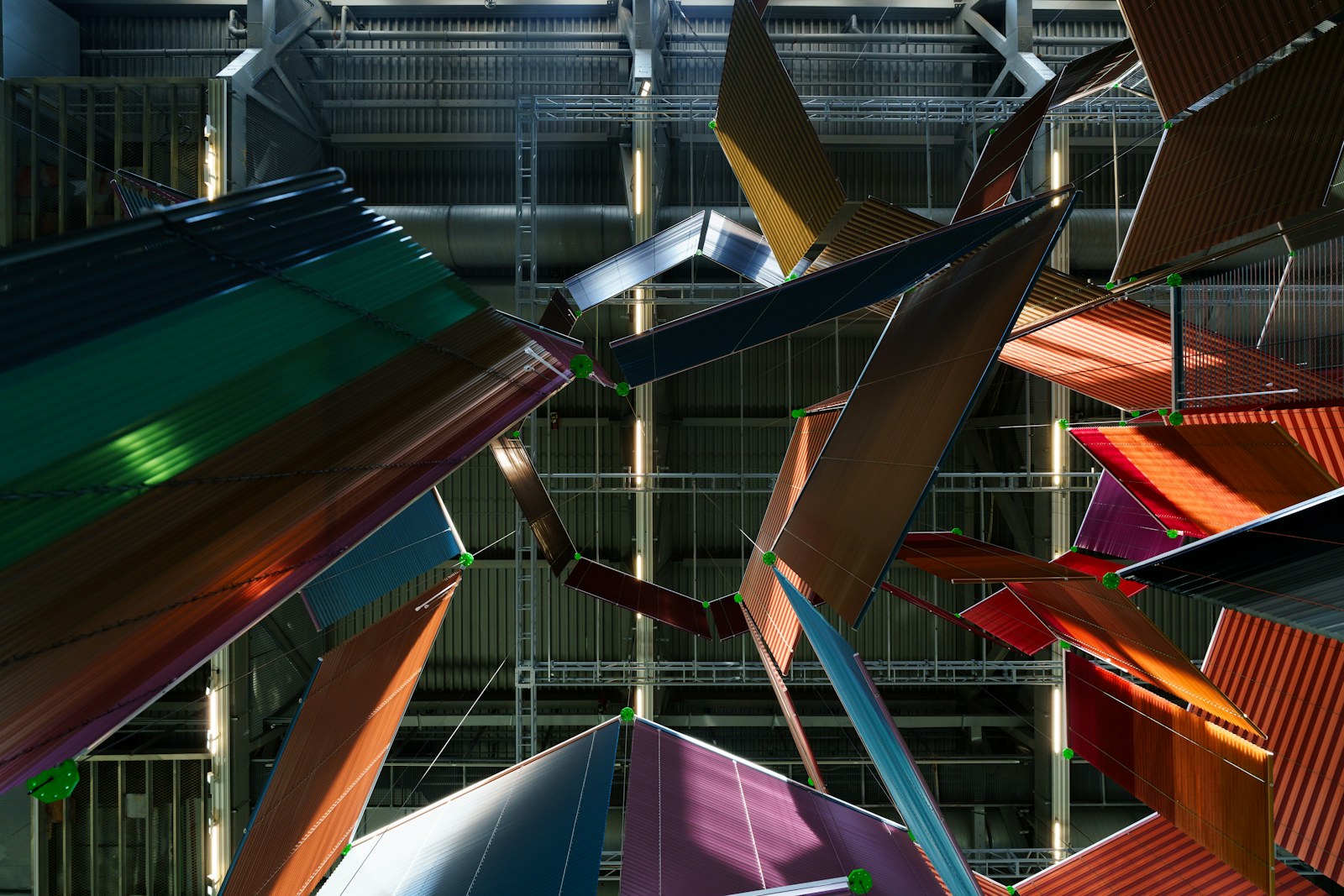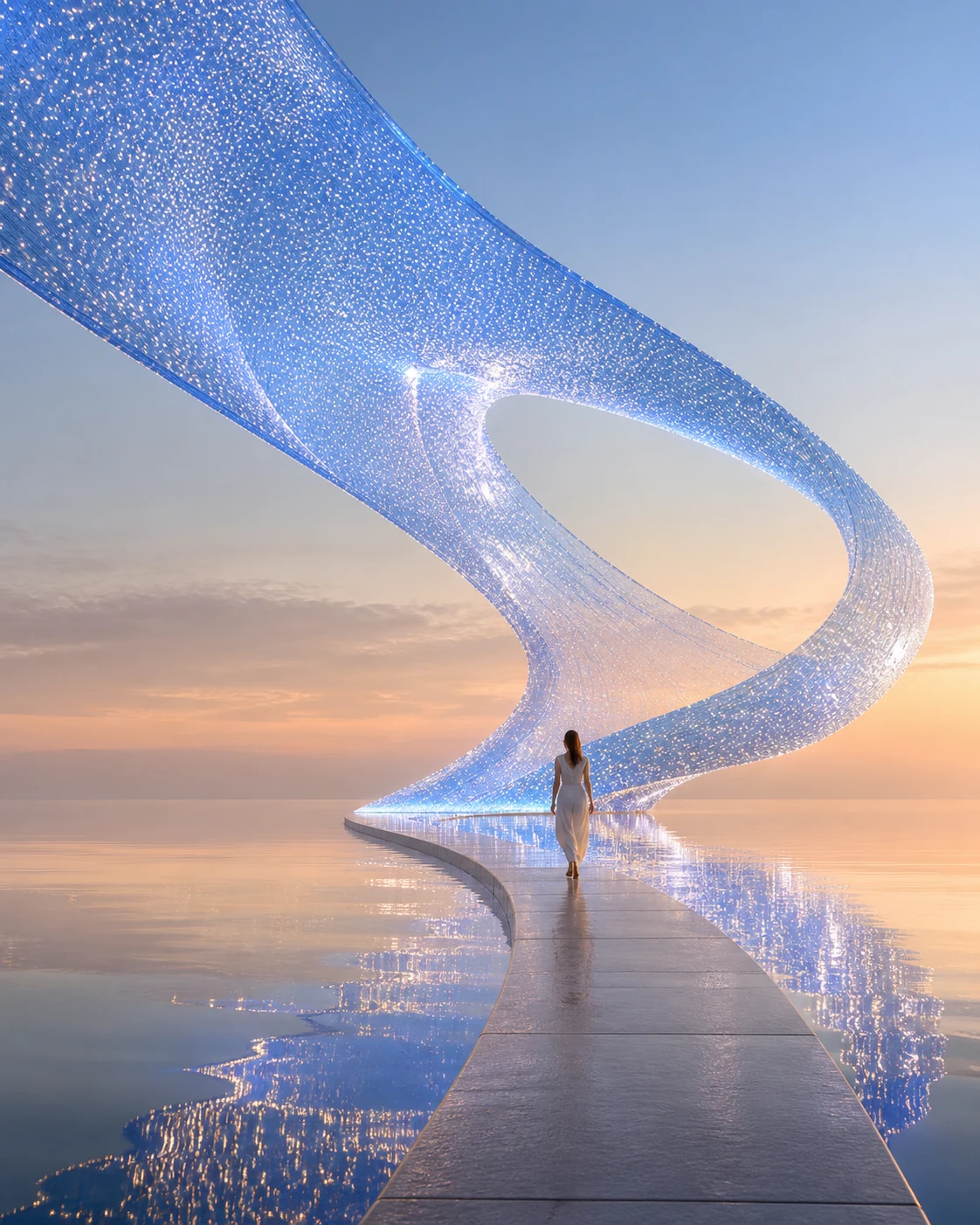
Blue reaches the body before it becomes a color name.
At six in the morning, a tiled kitchen contains a blue that does not yet belong to the tiles. It arrives from the window and settles over cups, steel and yesterday’s crumbs. Nothing has changed color, exactly. The room has entered a temporary agreement with distance.
This is the first of twelve places connected by one unreliable hue. They are not arranged from light to dark or calm to sad. Blue refuses those obedient categories. It changes allegiance according to material, scale, temperature and the color standing beside it.
The second place is a corridor cut through old ice. Light enters from above, loses its warmth and returns through compressed years. The blue here feels ancient not because it resembles history, but because the body understands that the walls contain time under pressure. A hand placed against them is touching weather that fell before the names of nearby towns existed.
Far south, an ultramarine room is barely large enough for one chair. Gold leaf surrounds a small opening in the ceiling. The combination makes the room feel ceremonial, almost vowed. Ultramarine does not recede politely; it gathers space into itself. Skin becomes briefly unreal against it, as if the visitor has stepped inside the background of an icon and discovered that backgrounds possess architecture.
The fourth blue is industrial cyan. It belongs to a data room in which there are no visible screens, only cold light travelling beneath a translucent floor. Cyan feels close even when its source is far away. It carries the peculiar intimacy of interfaces: a color designed to touch attention without ever touching the body.
At noon, the same cyan fills an outdoor swimming pool. Suddenly it is not technical but physical—chlorine, echo, wet concrete, the small shock where water reaches the ribs. A child dives through it and the color breaks into moving nets. No digital gradient has prepared us for how quickly blue becomes white when disturbed.
The fifth place is a coastal town under low cloud. Here blue cannot be isolated. Water lends it to concrete; concrete returns it to windows; windows send it into faces. Painters call the mixture grey because paint requires boundaries. The town experiences it as weather entering thought.
Coastal blue is often described as melancholy, but melancholy is too complete. The stronger feeling is suspension. Boats remain tied. Rain may begin or may already have ended. Horizon and cloud exchange responsibilities. A person walking along the seawall is not necessarily sad; they have simply been relieved, for a moment, of the need to decide where one thing finishes.
In the sixth place, blue is edible. A night market sells translucent fruit whose flesh shines like gas flame. Vendors illuminate nothing else. Hands, coins and paper bags appear only when they enter the blue radius around each stall. The fruit tastes of pear and cold metal. Visitors buy it for the glow and remember it for the metallic aftertaste.
The seventh place is a bedroom painted in the soft blue associated with reassurance. During daylight it performs calm perfectly. At night, under a cheap warm bulb, the walls turn green at their edges. The room reveals the hidden labor behind “soothing” palettes: calm was never contained in the pigment. It depended on a reliable collaboration with light.
There is also the blue of a flame, which reverses the common temperature metaphor. Visually cold, physically dangerous, it concentrates attention into a narrow edge. The room around it disappears. Blue becomes not atmosphere but instruction: look here, keep distance, understand that invisibility and heat are close relatives.
The ninth place is a railway platform at the hour after sunset when illuminated signs appear brighter than the sky but have not yet won. This blue lasts perhaps seven minutes. Commuters rarely notice because they are checking time inside another blue held in their hands. Above them, evening is performing the original interface transition.
Three final places are harder to enter: a library where every book has faded differently; a desert shadow that appears blue beside red stone; and a dawn in which blue is not arriving but disappearing. The last is the most difficult to remember. We notice colors when they intensify, yet morning often works through subtraction. Blue leaves the roofs, then the road, then the folds of white curtains. Daylight does not add clarity so much as remove a shared veil.
What, then, does blue feel like? Ceremony in one room, exposure in another. Cold that contains history. Heat that issues a warning. A promise of calm dependent on the correct bulb. Distance made visible, and proximity engineered by a screen.
The question fails if it expects a single emotion. Color is not a message delivered intact from surface to mind. It is an event involving the eye, the hour, neighboring matter and whatever memory happened to arrive first.
Choose one blue object and observe it five times in a day. Do not photograph it. At each hour, write down what the color makes the object seem capable of doing. By evening you will have five objects and no stable blue. This is not a failure of description. It is attention finally noticing movement.