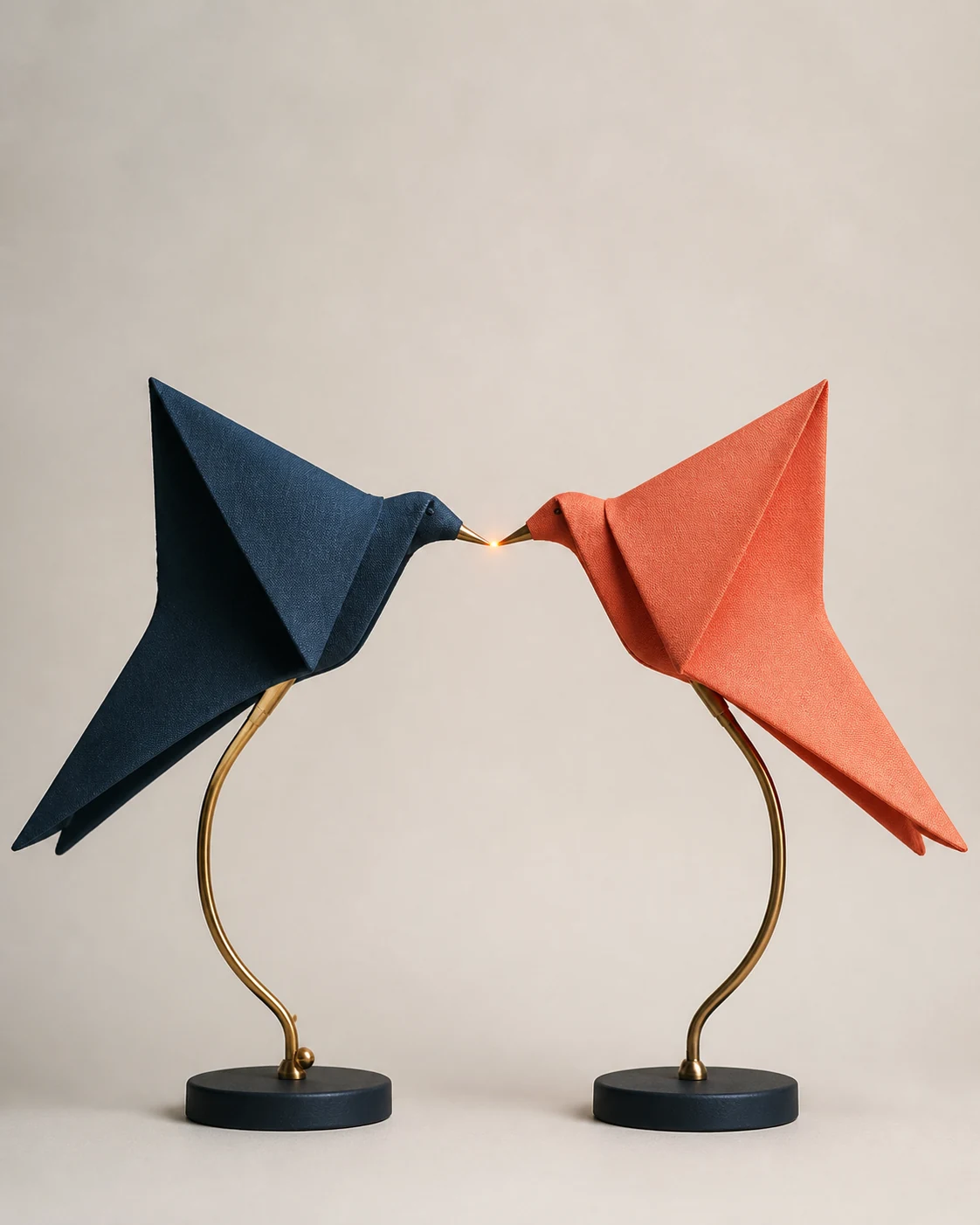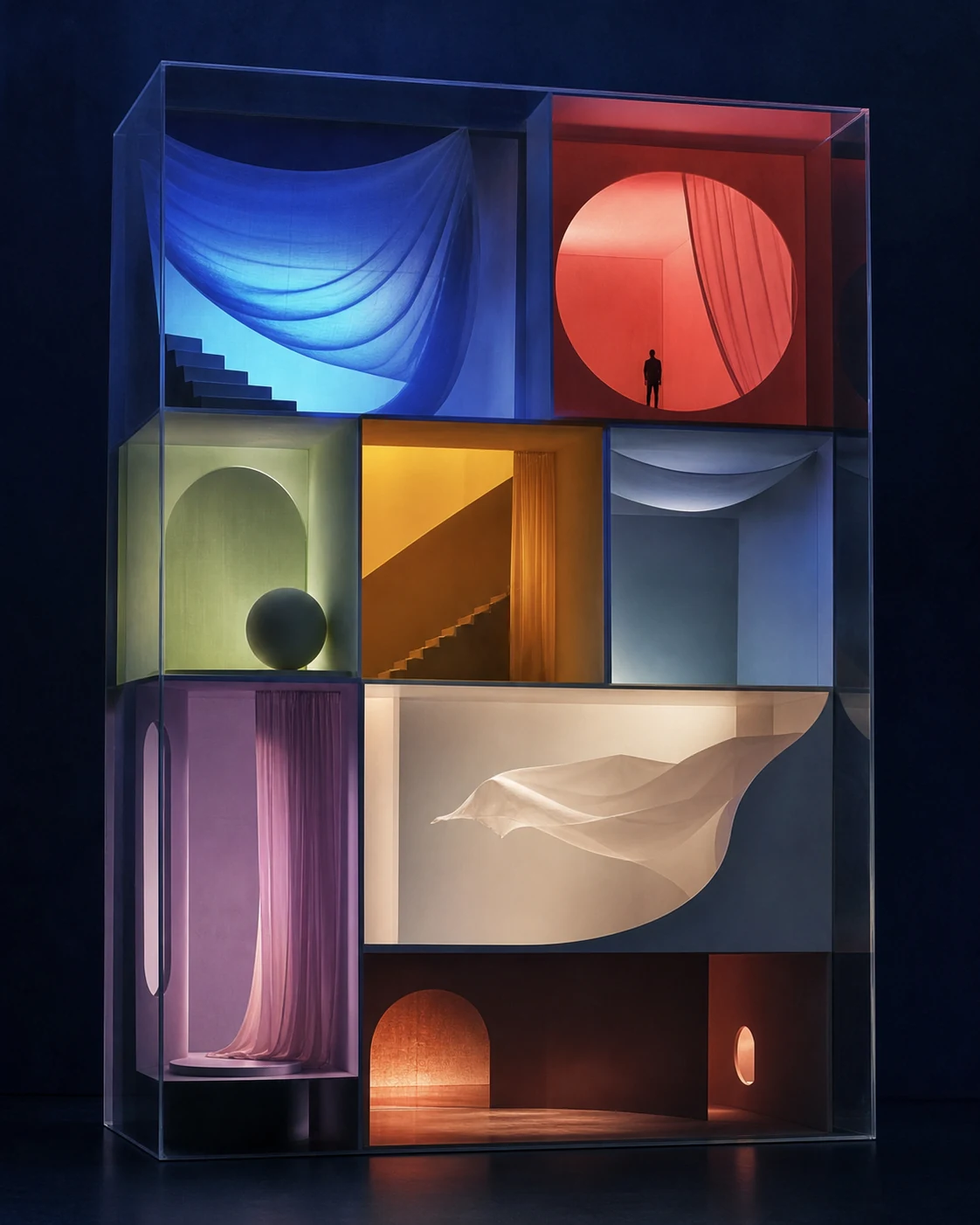
The rooms have no labels. Emotion must be inferred from what the body is invited to do.
You enter through a passage lower than expected. The ceiling rises gradually toward a window that cannot yet be seen. Light touches the far wall but withholds its source. Some visitors quicken their pace. Others stop beneath the lowest point and refuse the invitation forward.
Later, they name the room anticipation, anxiety or hope. The architect accepts all three answers. Space cannot deliver a feeling like medicine. Memory arrives before design and alters the dosage.
The next room is quiet without being silent. Felt absorbs footsteps, but voices remain clear. Corners are visible. The exit is never hidden behind the visitor. There is nowhere to perform calm for somebody else: no central chair, no perfect view, no object asking to be understood.
Many people call this room peaceful. Its peace depends less on softness than on legibility. Enclosure feels caring because leaving is effortless. A locked version of the same room would produce the opposite emotion without changing its color or material.
A narrow door opens into a kitchen occupied by a table three times ordinary size. The underside is a dark roof. Chair seats reach the chest. Adults begin touching the timber rather than discussing it. Their bodies have been returned, briefly, to an earlier scale.
No antique objects are present, yet visitors call the room nostalgic. Proportion has summoned childhood more effectively than a collection of toys could. Nostalgia is revealed not as a style but as a mismatch between remembered body and present body.
The fourth space contains a shallow pool of warm light. Nothing else distinguishes it. People step into the brightness and exhale before they know they have done so. This is the room most often called relief.
Relief is difficult to design directly because it requires a burden to precede it. The previous corridor is therefore slightly too long. Its floor tilts almost imperceptibly. By the time visitors reach the light, their ankles have been negotiating a problem their minds did not name. The room does not create relief; it reveals tension by ending it.
Beyond it stands a tall chamber crossed by one narrow bridge. The drop is shallow, barely more than a step, but darkness removes certainty. There is a handrail on only one side. Visitors choose whether to hold it, and the choice becomes visible to nobody waiting behind them.
The designers once called this courage. They removed the name after a visitor using a cane explained that courage was not the experience; inadequate access was. The bridge was rebuilt with two rails and a level alternate route sharing the same destination. Emotion without agency had become coercion.
A nearly white room follows. At first it appears empty. Slowly, a fine drawing emerges on the wall opposite the entrance. The eye must become patient enough to separate graphite from shadow. People lower their voices, though no sign requests it. This room is called focus by those who enjoy it and exclusion by those whose vision cannot resolve the image.
The drawing was later translated into touch and sound. Instead of diluting the room, the additions made its original assumption visible: the architect had mistaken one way of concentrating for concentration itself.
The seventh room is filled with moving reflections from a source outside the building. Wind, traffic and clouds edit the walls. It cannot be experienced twice, and this instability is usually named wonder. Yet wonder arrives only because the mechanics remain partially concealed. When a guide explains every reflector, several visitors become impressed and fewer become astonished.
The final room resembles the entrance. Its dimensions are identical, but the window is now open. Street sound enters. After a sequence of controlled atmospheres, ordinary air feels unusually specific. Visitors notice temperature, distance and the weight of their own clothing.
The exhibition ends without revealing the intended emotions. The rooms are not instruments for controlling mood. They are arguments about how feeling forms between environment and experience. Light, sequence, permission, scale and memory collaborate; none can claim authorship alone.
Outside, familiar interiors become less neutral. A waiting room instructs vigilance. A supermarket produces urgency through brightness and repetition. A bedroom may promise rest while its devices continue demanding response. The eight rooms have not taught a vocabulary of emotional design. They have made it harder to believe that any room is emotionally innocent.