A perfect material is useless to imagine. Perfection has no biography: it does not stain, exhaust anyone, arrive late, become unfashionable or force a difficult choice. It belongs in a catalogue without prices. Matter enters culture only when it begins to resist us.
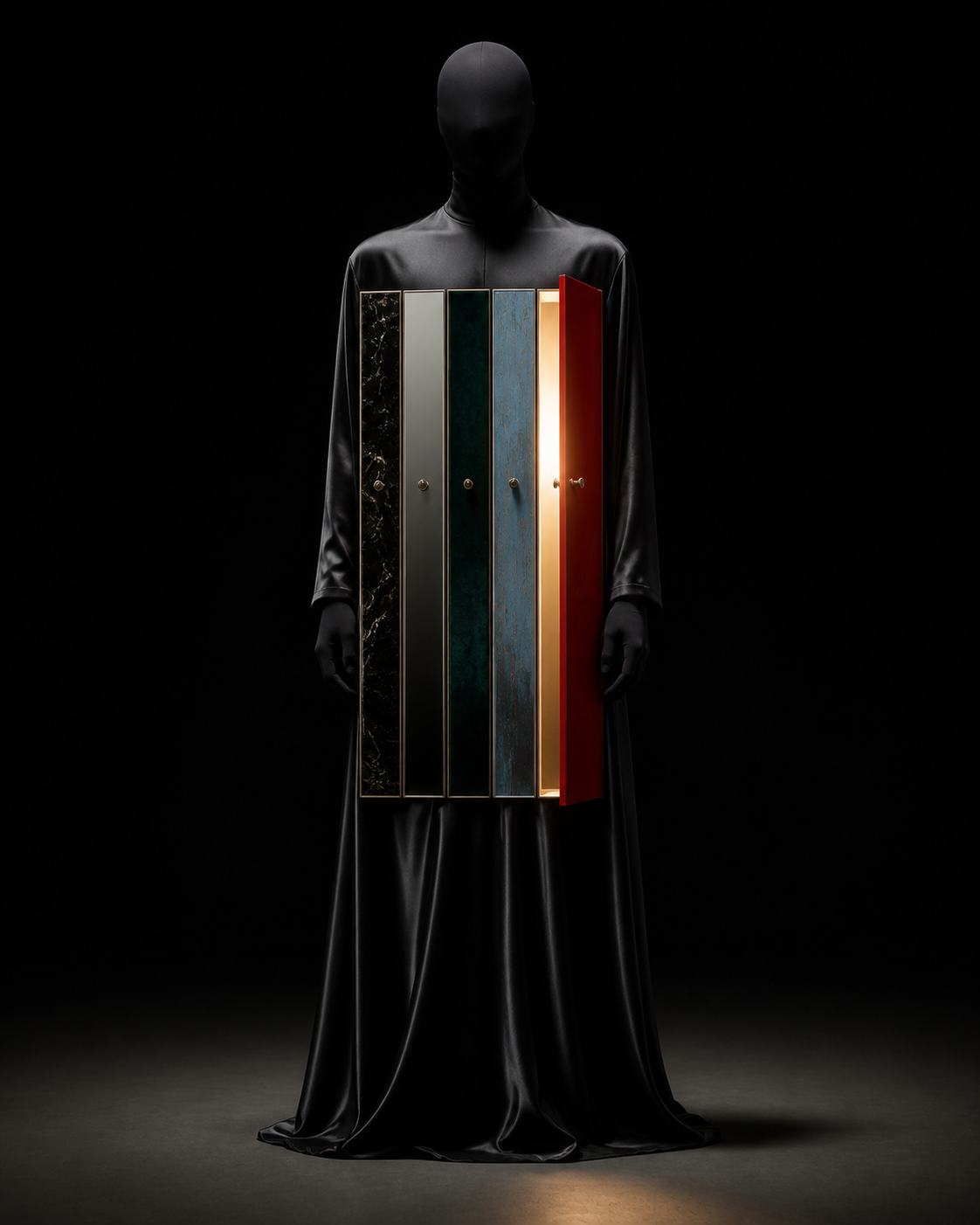
Imagine, instead, a materials library maintained in the basement of a city that does not appear on maps. Nothing there is magic in the convenient sense. Every sample performs one impossible act and then demands payment in another form. The librarian wears cotton gloves not to protect the specimens, but to protect herself from becoming part of their evidence.
The first drawer contains memory glass. Pressure does not crack it; pressure clouds it. A palm leaves a pale weather system that clears over several hours, while a lifetime of opening the same door produces a permanent milky handle. Architects initially celebrate the material as honest. Buildings will finally admit where bodies touch them. Hospitals use it to reveal neglected handrails. Museums discover the routes visitors actually take rather than those described by curators.
Then memory glass enters the home. A child can see that somebody stood outside a bedroom door. A cup preserves the shape of a hand that no one recognizes. Domestic objects become reluctant witnesses, and manufacturers begin selling solvents that make the glass forget. The invention promised memory but produced an industry of erasure. Its beauty lies precisely there: not in the clouding, but in the question of who is entitled to clear it.
Across the room hangs light cloth, almost absent on its rail. Unfolded, a square kilometre of it weighs less than a shirt. Stadium roofs rise from suitcases; emergency shelters travel in jacket pockets; a theatre can change its architecture between two lines of dialogue. But folded light cloth becomes impossibly heavy. The smaller it is packed, the more fiercely it presses toward the earth.
This absurd rule changes logistics more profoundly than weightlessness changes architecture. Warehouses must be enormous and nearly empty. A careless fold can pin a vehicle to the road. Possession becomes inconvenient: you may live beneath a magnificent floating canopy, but you cannot hide it in a cupboard when taste changes. The cloth makes spectacle easy and storage expensive. It turns the usually invisible afterlife of design into the central design problem.
Weather wood looks ordinary until the pressure falls. Its grain tightens hours before rain, drawing dark rivers across tables and walls. In coastal towns it becomes a public forecast: cafés do not check an application; they look at their chairs. Yet the wood slowly forgets its original shape indoors. A beam protected from weather begins to wander, developing a patient curve toward the nearest open window.
Engineers call this instability. Carpenters call it homesickness. Buildings made from weather wood cannot be completed and abandoned to maintenance schedules. They must be listened to. Their owners learn that sheltering a material from every discomfort may also remove the conditions that keep it itself. A house remains straight only by maintaining a small relationship with the storm.
Warm metal is less dramatic. It simply retains the temperature of the last human touch for several hours. Public handrails feel recently occupied even at dawn. Door handles pass warmth from strangers who never meet. In winter the material is welcomed as a minor civic kindness; in summer it is accused of intimacy. Designers debate whether a bench should disclose that another body has just left.
The argument exposes an old contradiction in public space. We want evidence of community without the inconvenience of other people. Warm metal refuses that abstraction. It makes shared infrastructure feel shared. On a deserted platform, the warmth of a rail can be comforting or alarming, and the material cannot decide which interpretation is correct. It only reports contact.
Cloud ceramic is translucent, strong and almost offensively serene. Its weakness appears under repetition. It can support a cathedral once, perhaps twice, but identical loads applied in identical ways make it brittle. Variation strengthens it. A stair made from cloud ceramic survives only if people do not step in exactly the same place.
At first, this seems like a material designed to punish standards. In practice it produces strange generosity. Floors invite wandering. Bridges require several equally legitimate routes. Furniture cannot dictate a single correct posture. Accessibility ceases to be an attachment because difference is what keeps the structure alive. The material turns diversity from a slogan into load-bearing engineering.
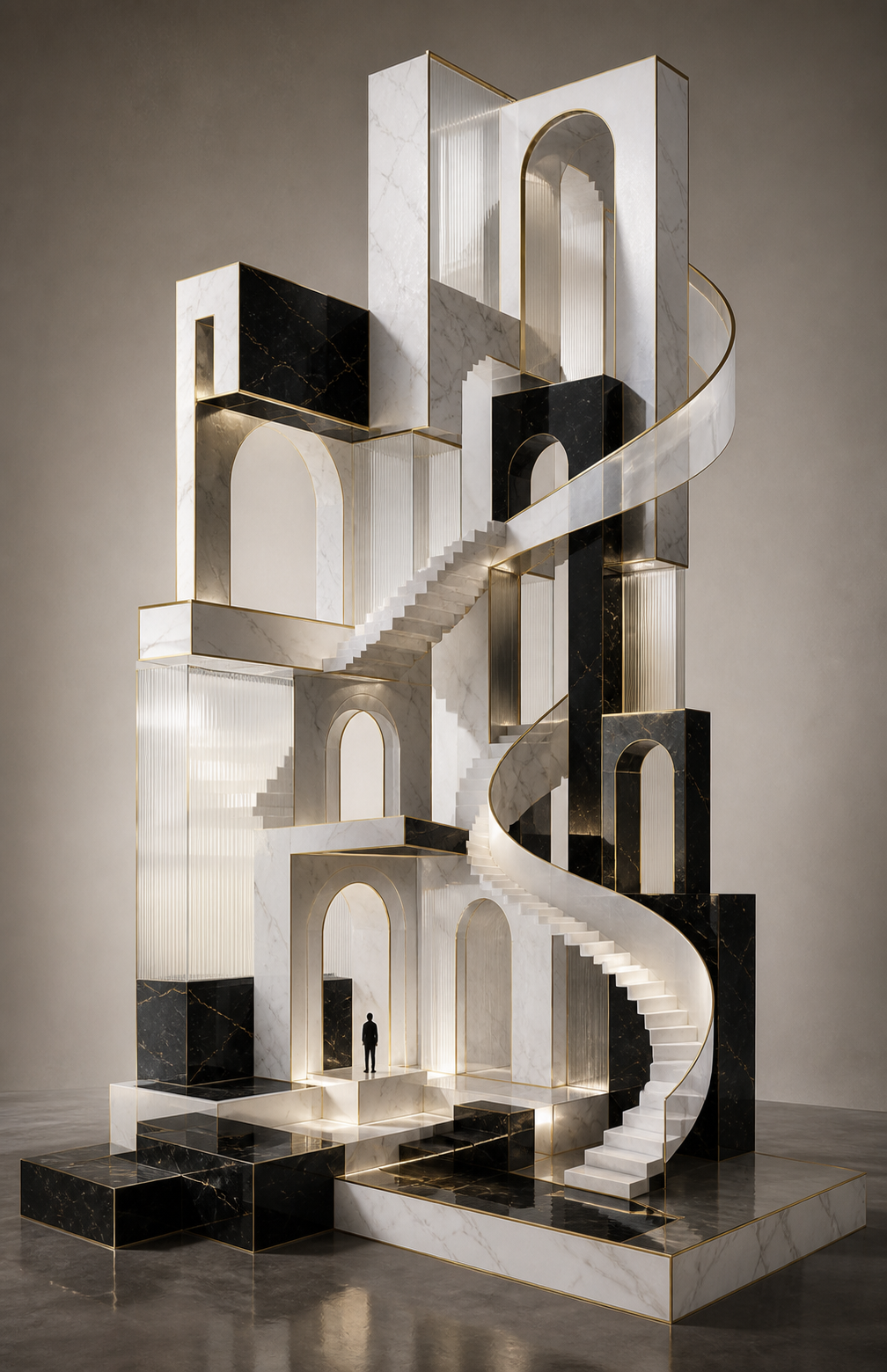
The final sample is reversible stone. Once in its lifetime it may be returned to liquid and cast again. Not twice. The decision cannot be tested or undone. Every building contract therefore contains a clause naming who may authorize the transformation: the owner, the architect, the people living nearby, or those who will inherit the site.
A courthouse could become housing; a monument could become a reservoir; a luxury tower could be poured into foundations for a public garden. But using the possibility also destroys it. Cities begin preserving mediocre buildings because their one reversal might be more valuable to an unknown future. Reversible stone gives architecture an escape route and immediately turns that route into a moral burden.
None of these substances would make design easier. That is why they are worth imagining. The fantasy of a flawless material usually conceals a desire to escape maintenance, labor, compromise and time. Real materials refuse that escape. Concrete carries carbon and cracks. Timber records climate and forestry. Plastic offers extraordinary duration to objects designed for minutes. Every surface is already an agreement with distant workers, future waste and forms of care that glossy renderings omit.
Impossible materials let us exaggerate those agreements until they become visible. Memory glass asks who controls evidence. Light cloth asks where marvels go when the performance ends. Weather wood questions whether protection can become deprivation. Warm metal makes public life bodily again. Cloud ceramic turns difference into strength. Reversible stone gives regret a material form.
The librarian closes the drawers. Nothing can be ordered, and no sample may leave the room. Yet ordinary objects feel altered on the walk upstairs. A steel railing is no longer merely steel; it is a decision about temperature, durability, mining, touch and who will polish it after midnight. The imaginary collection has done its work. It has not supplied better matter. It has made matter difficult to ignore.