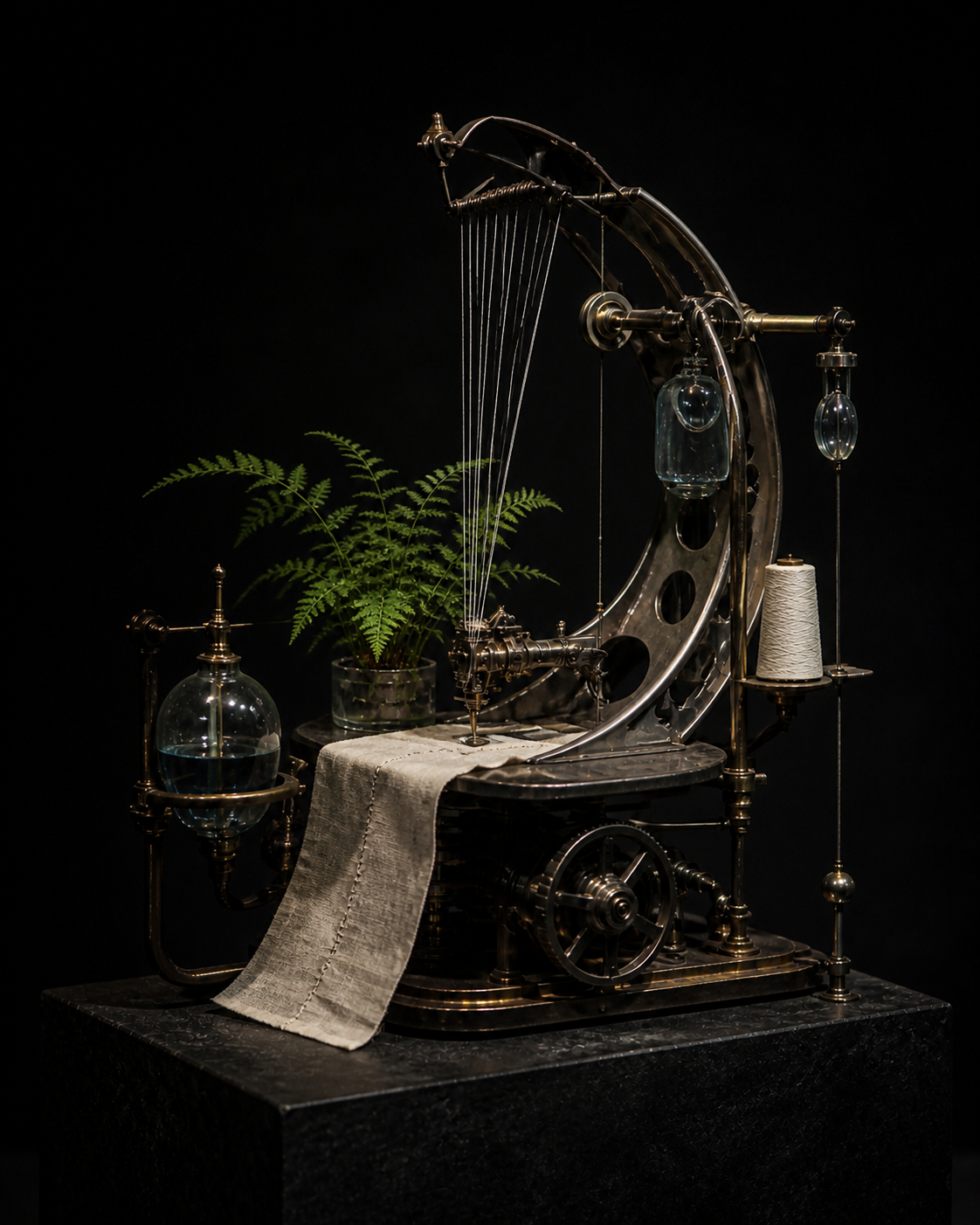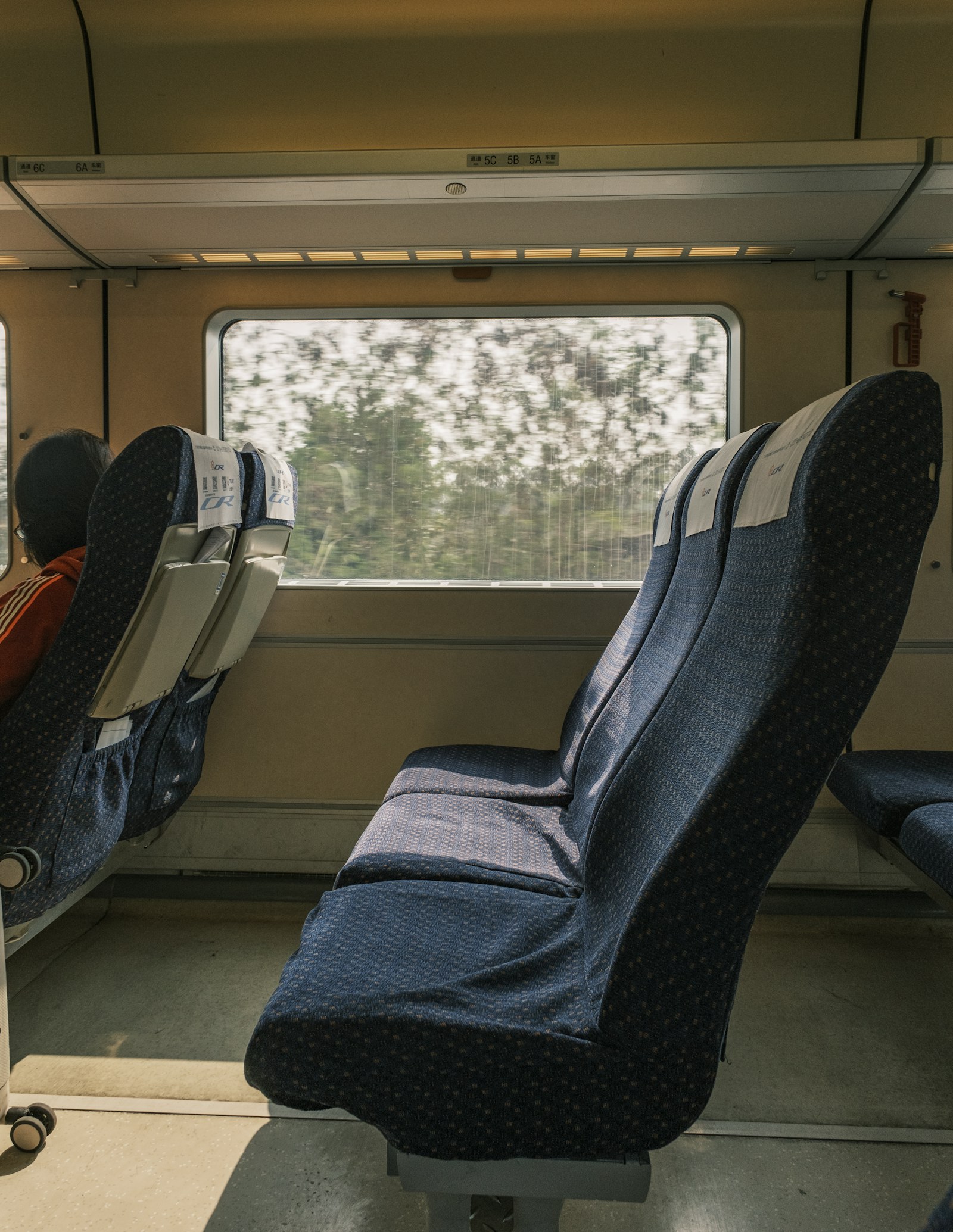
At 7:12 every morning, the Number Six arrives carrying a room that belongs to nobody.
It is still recognizably a tram. The doors sigh, the wheels complain at the same tight corner near the bakery, and a recorded voice mispronounces the name of Saint Orra Square. Yet the usual rows of identical seats are gone. In their place stand small constellations of furniture: two upright chairs angled toward a window, a broad bench beneath a brass reading lamp, a narrow table scarred by thousands of cups. Nothing matches. Everything looks as though it has already survived a life elsewhere.
The city calls it the Common Room Line. Nobody remembers approving that name. The first timetable simply appeared one Monday with a sentence printed beneath it: Travel together without being arranged like luggage.
Mara boards at the depot terminus because that is where the pale green armchair is usually empty. She does not consider it her chair. She would find that embarrassing. Still, its left arm has been polished by her coat, and the conductor has learned to pause half a second longer when he sees her crossing the road.
Across from her, a night nurse removes her shoes and places both feet on a heated rail. A boy completes his mathematics homework at the table while his father sleeps upright beside him. Two construction workers share a newspaper without speaking. None of this would be remarkable in a home. On public transport, it feels like evidence from a kinder civilization.
The Common Room was not designed because passengers asked for luxury. They had asked for smaller things: somewhere to put a bag without guarding it between their ankles, light that did not make every tired face look accused, announcements audible without being shouted, a place to sit that did not require performing indifference toward the person twenty centimetres away.
The engineers began with acoustics. Hard panels were replaced by washable felt pressed from old uniforms. The ceiling learned to absorb the sharp edge of phone calls while leaving conversation intact. The doors stopped announcing themselves with an electronic shriek and adopted a low wooden knock. Then came the tables, the lamps and the seats facing more than one direction. Comfort entered quietly, disguised as maintenance.
For the first month, passengers behaved as visitors. They wiped away crumbs, folded discarded newspapers and asked before taking the seat beside a stranger. The transit authority celebrated the experiment with photographs of commuters smiling over ceramic mugs. Someone in communications used the phrase your home on the move, and the public objected immediately.
A home has a lock. It allows possession, retreat and the private arrangement of bad habits. The Number Six offered none of these. Its warmth had to remain available to the person who smelled of rain, the child who kicked the table leg, the woman speaking too loudly to her sister, and the man whose presence made everyone subtly inspect the next carriage.
The argument became fiercest around the long blue sofa. It could hold five people, six in winter, or one person determined to prevent the matter from being tested. Small brass plaques were proposed: PLEASE LEAVE ROOM FOR OTHERS. The plaques made the sofa feel policed. Painted lines were worse. Finally an upholsterer stitched a loose archipelago of differently textured patches into the fabric. Passengers began to occupy the islands without being instructed. A design problem dissolved into a pattern that trusted the body to understand.
Other negotiations followed. The reading lamps were bright enough for books but dimmed automatically when pointed at a sleeping face. A shelf welcomed groceries, flowers and musical instruments but was deliberately too shallow for advertising screens. The tables had no charging sockets at first. When sockets were added, they were placed between seats, so electricity became something people occasionally had to discuss.
Not every invention survived. Curtains around individual chairs were removed after three days; behind them, people felt licensed to forget they were in public. Cushions disappeared into bedrooms across the city. A cabinet intended for shared books filled with takeaway menus and one furious anonymous diary. The indoor plants lasted until the tram entered a week of hard braking and distributed wet soil from the depot to the river.
The failures mattered. A convincing imitation of domestic space encouraged passengers to claim territory. A less convincing one invited them to negotiate it. The tram became comfortable precisely because it never allowed anyone to complete the illusion of being alone.
At East Market, a woman with a folded wheelchair boards through a level door. The aisle is wide, not as a special accommodation but because narrowness was judged an unnecessary tradition. A low table swings aside. Nobody must surrender a designated place; the room alters its shape. Nearby, a teenager turns down his music before being asked. He does not do this from exceptional virtue. He has simply noticed the room noticing him.
This is the strangest effect of the Number Six. Ordinary carriages make people vanish into private shells. The Common Room makes them lightly legible. Not intimate, not friendly, not available—just present. You become aware that the stranger beside the lamp has missed three calls, that someone is carrying a cake through rush hour, that the old man by the rear door changes trains every Thursday with a bunch of mint wrapped in newspaper.
Mara knows none of their names. She prefers it that way. Names would turn the journey into a club, and a club eventually decides who looks unfamiliar. What she values is the weaker bond: recognition without obligation. The city is full of people she will never meet, but on the tram they briefly agree on the temperature of a room.
One November morning the service stops inside the tunnel. The lamps remain on, though the wheels and ventilation fall silent. After seven minutes, the recorded voice apologizes without explanation. Phones rise, find no signal and return to pockets.
In a normal carriage, delay expands. Every minute becomes an object pressed into every passenger’s hand. Here it behaves differently. The boy at the table deals cards from his school bag. The nurse wakes and identifies the sound in the wall as water moving through an old pipe. Someone produces clementines. Their skins release a bright smell that travels farther than conversation.
Nobody pretends the delay is pleasant. The construction workers will lose part of an hour’s pay. Mara’s appointment will begin without her. Comfort does not cancel the system’s obligations, and upholstery cannot redeem a broken timetable. But irritation no longer has to be endured in the posture of captivity. People shift seats. A route map becomes a scorecard. The stalled tram holds them without demanding that they enjoy being held.
When the power returns, the room gives a small collective start. Cards are gathered. Peels disappear into a paper bag. The interruption has created no friendships and no revelation worth commemorating. By Saint Orra Square, almost everyone has resumed the guarded expression required by the street.
Mara is last to leave the green chair. Its fabric rises slowly where her body has warmed it. Another passenger sits before the impression disappears.
The Number Six continues toward the river, carrying no one home. It carries something more difficult: a temporary interior in which strangers can remain strangers without being treated as obstacles. The room belongs to nobody, which is the only reason the whole city can enter.