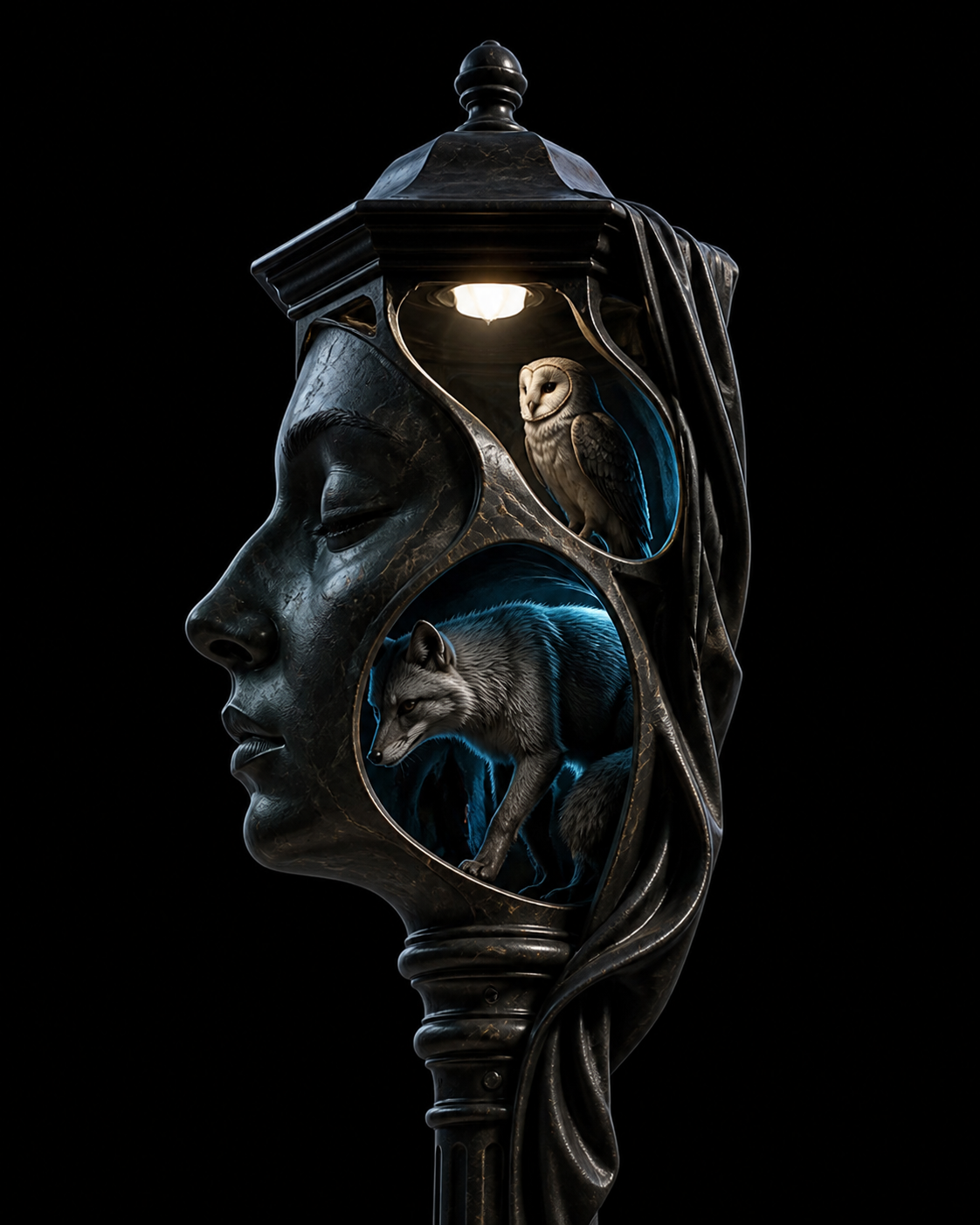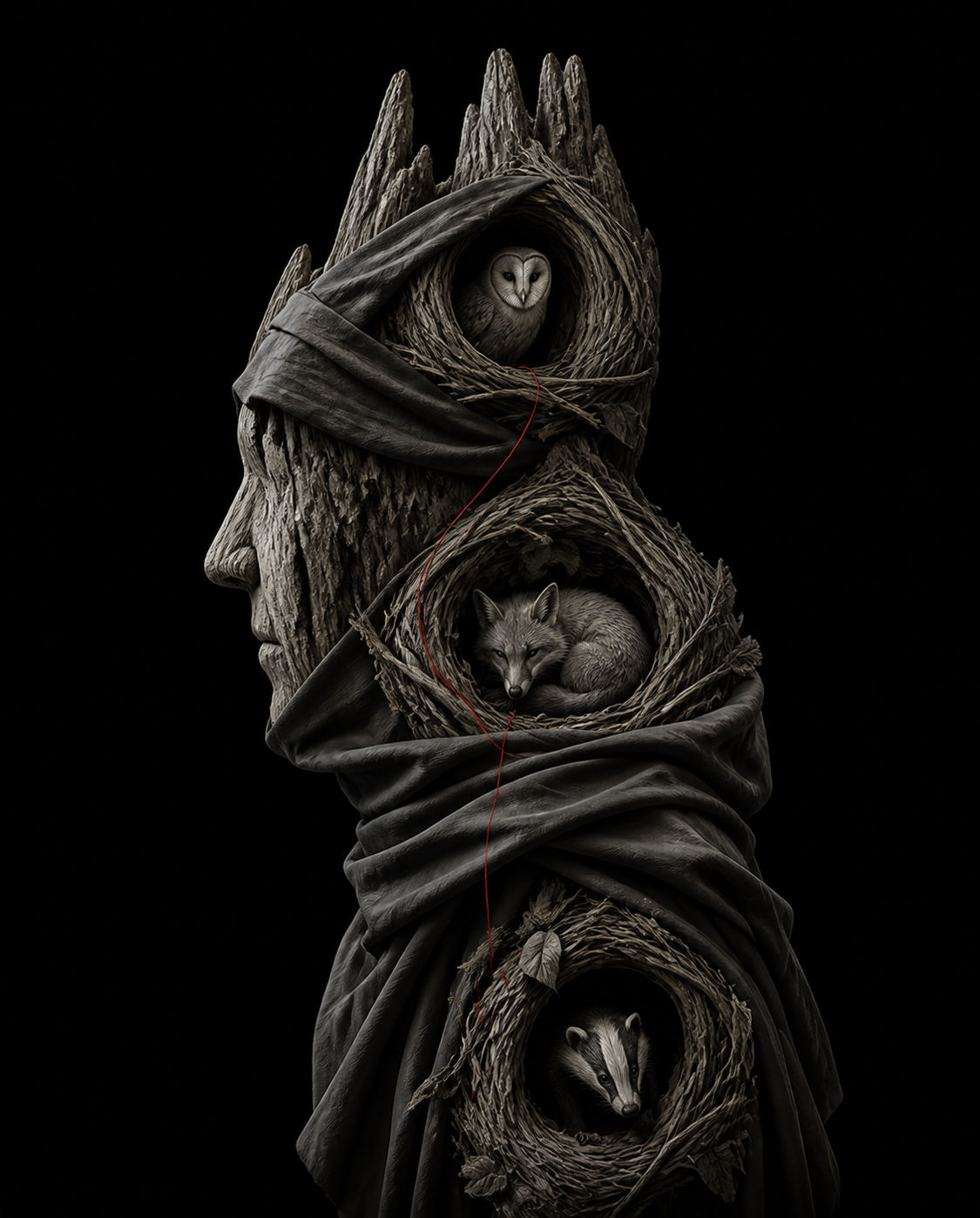
The architect arrives with drawings. The fox walks around them, chooses the driest edge of the clearing and begins digging somewhere else.
The client is a body, not a mood board. A fox values concealed exits, stable soil and a route that does not carry its scent toward danger. An owl needs height, silence and a flight path free from decorative branches. A hedgehog’s ideal entrance looks unfinished because compression, not symmetry, produces safety.
Once these preferences become the brief, familiar ideas of beauty lose authority. The façade matters less than the transition from exposed ground to shelter. A plan is judged at nose height. Materials are selected for smell, repair and the sound they make in rain.
Buildings that expect to change. The imagined houses use woven grass, packed earth, fallen bark and branches already surrendered by the wind. Damage remains visible. Spring growth tightens a wall; autumn leaf fall opens a lookout. Maintenance is not evidence that the architecture failed—it is how the building participates in time.
Human homes often conceal maintenance until failure becomes expensive. The animal house offers a different aesthetic: every patch records attention, every worn route proves use, and no room is considered complete if its occupant cannot alter it.
The deeper experiment is to design without assuming that the photograph is the final judge. Where does a body pause before entering? Which corner stays warm after sunset? Can an anxious visitor leave without crossing the center of the room? Architecture becomes generous when it starts with behavior and lets appearance arrive later.