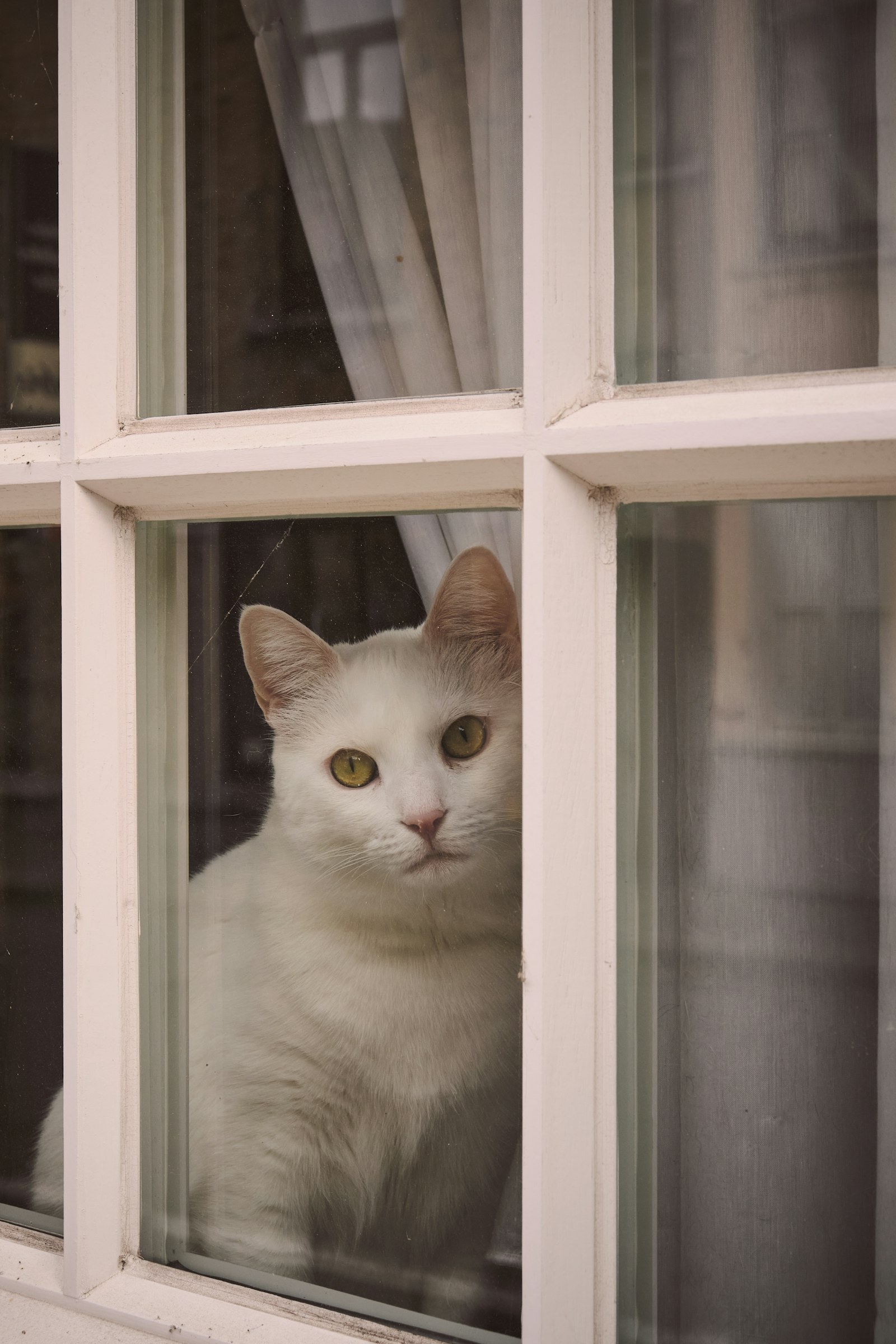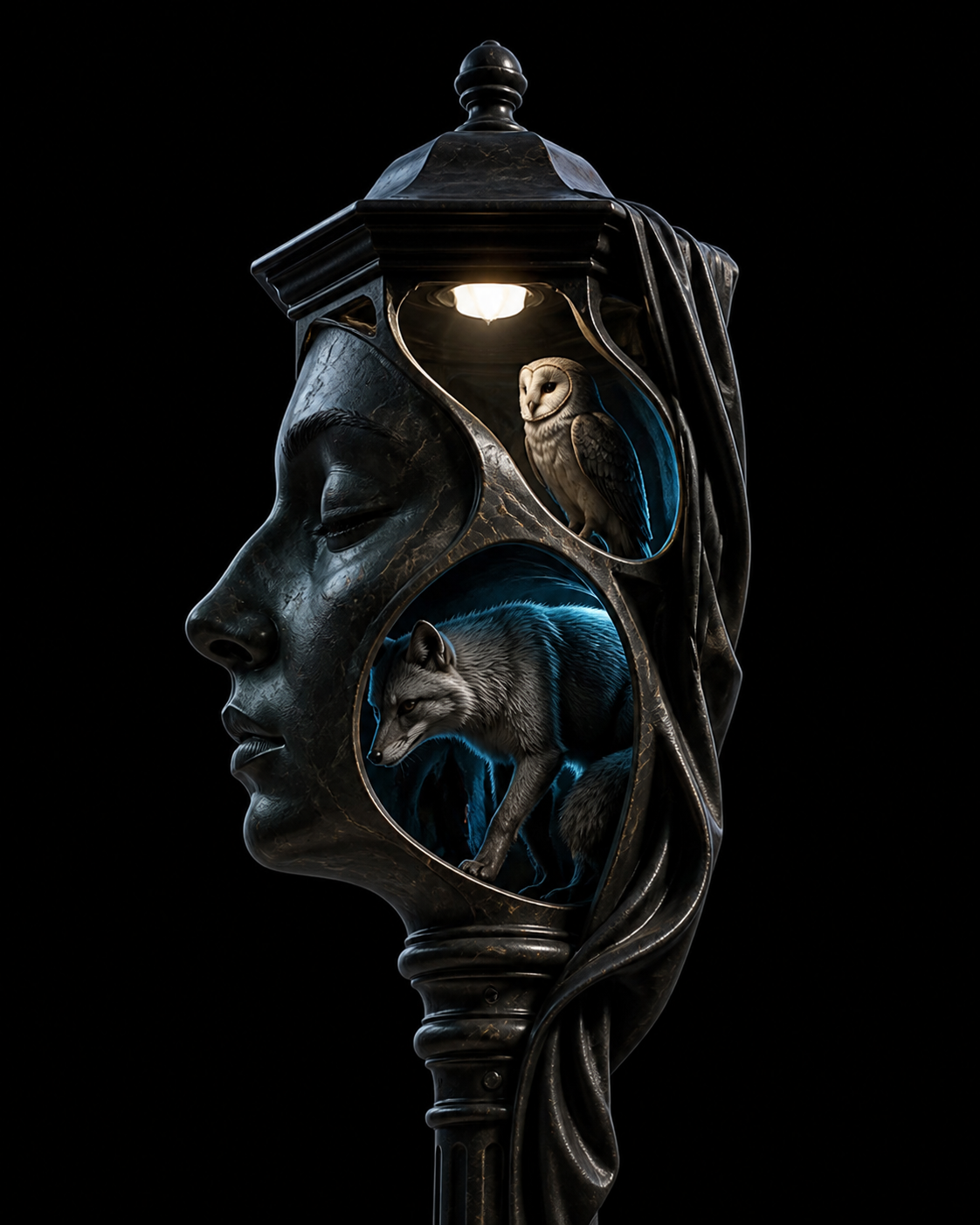
At 1:37 a.m., after the final train leaves, the city changes management.
Mara Venn knew the exact minute because she was responsible for the clocks in Central Maintenance. There were forty-two of them on the control-room wall, one for each district, although all showed the same time. The duplication had been introduced after a councillor complained that the northern wards looked underrepresented during emergencies.
That Tuesday, Mara was alone with a paper cup of coffee and a map blinking with minor faults. A blocked drain on Bell Street. A signal cable overheating beside the canal. Three lamps out along the eastern footpath. None justified waking a repair crew before morning. She logged each report, assigned a number and watched rain gather against the windows.
At 1:44, the Bell Street warning cleared by itself.
Mara reopened the camera feed. Four raccoons stood around the drain. One had both forelegs inside the grate. Another held a strip of silver food wrapping that had been pulled from the pipe. The largest animal sat apart, turning its head between the workers and the empty road. When the grate began swallowing rain again, all four moved on.
The city had raccoons; everyone knew that. They appeared in complaints, insurance photographs and videos filmed through kitchen windows. What surprised Mara was the order of their departure. They walked single file toward the canal, stopped beneath camera 18C and looked directly into its lens. The last raccoon touched the base of the pole twice before following the others.
A second warning vanished. The overheated signal cable returned to normal.
Mara brought up 18C. A fox was digging beside the cable housing. It worked quickly, pushing wet soil away from the metal box until cool air could circulate beneath it. The raccoons waited several metres back. When the temperature on Mara’s panel dropped into the safe range, the fox stopped. The largest raccoon crossed the path and placed something beside its front paws: half a bread roll, still inside a paper napkin.
The fox took the roll. The animals separated without ceremony.
Mara checked the archived footage. The same cameras had recorded movement on previous nights, but the software classified animals as background interference and removed them from the searchable timeline. She turned off the filter. The map filled with small white marks, hundreds of them moving through service alleys, planted medians and railway cuttings.
They did not wander at random. Hedgehogs followed the lowest curbs and paused wherever fallen leaves covered a storm inlet. Pigeons settled on loose roof tiles until their combined weight made the damaged rows visible to thermal cameras. A pair of foxes crossed the new cycle bridge again and again, avoiding its centre. Mara checked the construction file and found that a rubber expansion strip had lifted there, leaving a narrow gap capable of catching a bicycle tyre.
At 2:11 she called Idris, the night electrician.
MARAAre you anywhere near the eastern footpath?
IDRISI can be there in ten minutes. What happened?
MARAThree lamps failed at the same time. Before you replace anything, check the ground beneath them.
IDRISWhat am I looking for?
MARAI don’t know yet. And if the owl is still there, give it some room.
Idris was silent long enough for Mara to hear his van indicator clicking.
Through the footpath camera, she watched him arrive beneath the first dark lamp. An owl occupied the working lamp at the end of the row. Below it, moths struck the glass in pale bursts. The failed lamps had no insects around them. Idris opened a service panel and found that each fuse had been packed with damp moss—not enough to damage the wiring, but enough to break the circuit.
He removed the moss from one panel. Before he could reach the second, the owl left its perch and flew low across his path. It did not attack. It landed on the dark lamp and remained there, facing him.
“All right,” Idris said into the phone. “I understand the suggestion.”
He restored only the lamp nearest the road and angled its shield downward. The owl watched from the next pole. Within minutes, insects returned to the darker trees instead of circling above the pavement. The bird followed them.
Mara began a second map on tracing paper because the official system had no symbols for what she was seeing. She marked the raccoons’ drain route in blue pencil, the fox crossings in red and the owl’s dark corridor in grey. Lines joined beneath bridges and passed through gaps in fences no planner had recorded. The animals used the city’s neglected edges as a connected network: a warm pipe behind a bakery, a strip of weeds beside a car park, the dry ledge under a tram platform.
At 2:38, every animal on the western cameras changed direction.
Pigeons lifted from roofs. Foxes left the market bins unopened. Even the raccoons abandoned a drain inspection and ran uphill. The movement converged on Low Market, where six streets met above a buried section of the old river.
No fault showed on Mara’s map.
She enlarged the nearest camera. A badger stood in the centre of the empty junction, claws scraping the asphalt. Two foxes paced along the curb. Rats climbed from a ventilation shaft and immediately retreated. The animals were not repairing anything. They were trying to draw attention to it.
Mara checked water pressure, gas pressure and electrical load. All normal. Then she remembered the rain entering Bell Street before the raccoons cleared its drain. Low Market sat downhill from four districts, yet the drainage map showed no main pipe beneath the junction. The pipe had been omitted because it predated the current street plan.
She opened a scanned engineering survey from 1891. A brick culvert crossed directly under the badger.
Mara called the emergency street team and reported a possible collapse. The supervisor asked which sensor had detected it. She looked at the animals gathering beyond the camera’s frame.
“Surface movement,” she said.
The first truck arrived at 3:06. Workers closed the junction and drilled a test hole. Beneath thirty centimetres of asphalt they found an empty chamber where floodwater had removed the soil around the old culvert. The road surface was holding only because two tram rails, buried decades earlier, still crossed the cavity. Morning traffic would have broken it.
The badger waited beside a bus shelter while the crew installed barriers. When the last fence panel locked into place, it returned to the hill. The foxes left in opposite directions. Rats emerged from the shaft and resumed whatever work the emergency had interrupted.
By four, Mara’s tracing-paper map had become too dense to read. It showed not a secret government beneath the streets, as she had briefly imagined, but something less orderly and more useful. No animal understood the whole city. Each knew a small territory with an accuracy the control room could not match: where water should move, which ground ought to feel solid, when a familiar hum changed pitch, where darkness had disappeared.
Together, their reactions formed a warning system no one had designed.
At 5:20 the day supervisor arrived carrying two coffees. Mara showed him the Low Market report, then the footage from Bell Street and the eastern footpath. He watched the raccoons remove the blockage. He watched the owl prevent Idris from relighting the whole path.
DAY SUPERVISORYou want me to enter animals as maintenance staff?
MARANo. Staff have contracts. These are residents reporting defects.
DAY SUPERVISORResidents usually use the complaints form.
MARAThe form requires an email address.
He looked again at the photograph of the collapsed culvert and approved a trial note in the monitoring procedure: repeated animal activity near buried infrastructure was no longer to be filtered automatically. It was not the recognition Mara wanted, but it meant the next warning might remain visible.
Before leaving, she added one more layer to the control-room map. It contained no animal icons. Instead, she marked the passages they depended on: an opening beneath a fence, the hedge linking two courtyards, the unlit half of the eastern footpath. If those small connections vanished, the city would lose more than wildlife. It would lose thousands of eyes, ears and sensitive feet already present when a sensor failed.
At 6:03 commuters began crossing Low Market on the temporary walkway. They complained about the barriers and photographed the hole. None noticed the badger’s muddy prints beside the first warning sign.
Across the city, the night shift withdrew into attics, reeds, tunnels and the narrow spaces behind warm walls. Mara turned the animal filter back on, but changed its setting from DISCARD to RECORD.
The clocks reached 6:15 together. Human management resumed with no idea how close it had come to inheriting a broken street.