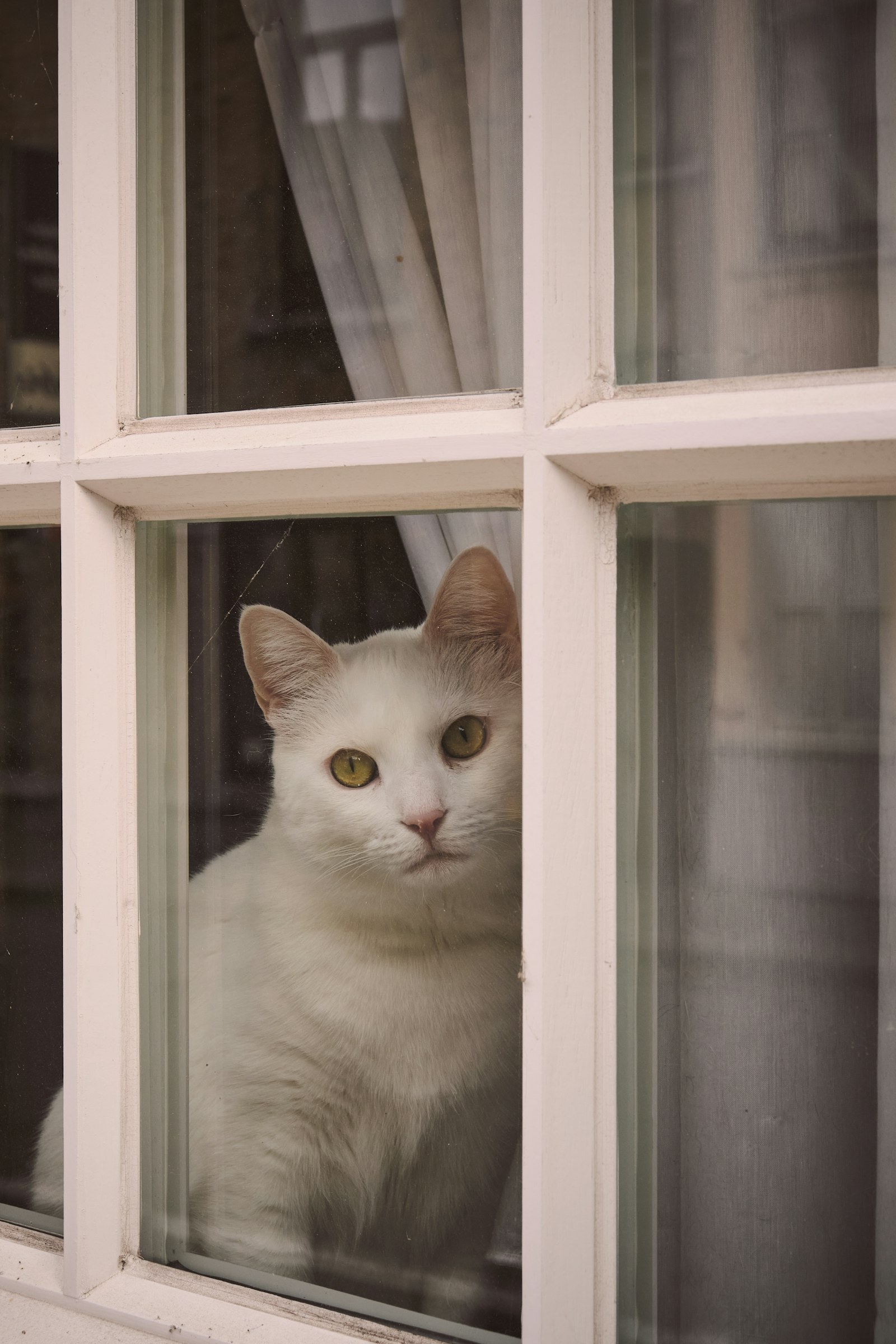
On the first morning of the move, Mara removed the armchair from the living room and discovered that her cat had been using it as a bridge. Clove sat before the pale rectangle left in the carpet. He looked at the window, then at the bookcase, then back at the missing chair. The distance between window and shelf was less than a metre. He could have crossed it in a single jump. Instead he walked around the room twice, entered the kitchen and remained beneath the table until evening.
Mara assumed he disliked the noise. The apartment had begun to speak in unfamiliar voices: tape tearing from its roll, plates touching inside paper, drawers closing after years of being left slightly open. Every few hours another familiar shape disappeared into cardboard. The rooms were still in their proper places, but their contents had begun withdrawing from them.
By noon Mara had taped a floor plan beside the front door and given every room a letter for the movers. Bedroom B. Kitchen K. Living room L. She wrote the same letters on the boxes and added numbers until the apartment appeared to have been translated into a language made entirely of destinations. The arrangement was efficient and mildly consoling. Forty-three boxes stood where eight years had been.
Clove did not recognise the plan. His apartment had no bedroom, kitchen or living room. It had warm places, exposed places and routes that could be crossed without touching the floor. The armchair had connected morning sun to the upper shelf. With the bridge gone, two districts of his home had been separated. Mara did not understand this yet. She only noticed that Clove stopped appearing where she expected him. He no longer waited beside the cupboard when she opened a tin. He approached his water from behind the refrigerator instead of through the doorway. At night he crossed the hall along the narrow strip hidden by stacked boxes, brushing each one with his flank as if checking that the buildings had moved while he slept.
The second morning, the movers took the sofa. Behind it lay three felt mice, a wooden button, two receipts, a dry leaf and the blue cap from a pen Mara had lost in winter. Clove inspected the collection without touching it. Then he stepped into the long band of dust where the sofa had stood and gave a low, uncertain sound. It was not addressed to Mara. It seemed directed at the room itself, which had failed to remain where he had left it.
That afternoon he disappeared.
Mara checked the empty wardrobe alcoves, the kitchen cabinets, the bath, the space behind the washing machine and the shelf above the hot-water tank. The windows were shut. The front door had remained locked since the movers left. She shook a packet of treats until the noise became embarrassing in the bare rooms, but no cat appeared.
She searched again with a torch. From standing height, the apartment offered few possibilities. Walls met floors. Closed boxes formed simple rectangles. There were no curtains, no cushions and no loose fabric deep enough to conceal an animal. Emptiness seemed to have made the place perfectly legible, as if losing its furniture had forced it to tell the truth.
Then Mara found a single white hair caught on the underside of the kitchen table. She knelt to remove it and saw the apartment change.
At thirty centimetres above the floor, the numbered boxes stopped being containers and became a crooked street. Their handholds made dark windows. Gaps left for human feet opened into courtyards. The table was no longer a surface but a roof supported by four wooden trunks. Beyond it, the half-packed hallway narrowed toward the bedroom like a tunnel with several concealed exits.
Mara lowered herself onto her hands and knees. At that height, the move had not emptied the apartment. It had broken it into islands.
She followed the strip behind the refrigerator and found a patch of warmth where its motor entered the wall. From there, faint marks crossed the kitchen tiles to a box of saucepans. The marks disappeared at one corner and resumed on top of a smaller box beside it. Clove had not simply walked through the rooms. He had used height to fold distant places together.
Mara fetched the paper plan from beside the door and placed it on the floor. Its black lines looked confident and almost entirely wrong. The printed doorway between the hall and living room mattered less than the hand-width opening behind Box L17. The window was not the end of a room but a source of moving heat. The radiator extended far beyond its metal body, making one patch of floor belong to a different season from the boards beside it.
She began marking Clove’s routes in red pencil. One line ran from the radiator to the former armchair bridge, another beneath the sofa’s vanished shelter, a third through the curtain that had once hung beside the balcony door. Because the curtain was gone, the third line now ended halfway up an empty wall. The marks crossed Mara’s six rooms without respecting them, looping around warm pipes and forming sudden islands on top of cupboards. They resembled the plan of a small city drawn by weather rather than streets.
Near the bedroom she found a paw print in dust on Box B09. Another appeared on B12, higher and slightly blurred. The boxes formed a staircase to the wardrobe alcove, but the final step was missing. Mara had moved B14 to the hall that morning.
She carried it back. The new position looked inconvenient from above. It blocked half the doorway and ruined the clean stacks prepared for the movers. From the floor, it completed an ascending path. Mara added an arrow to the red plan and followed it over the boxes, using a kitchen chair where Clove would have jumped.
At the top she found nothing except a shallow dent in the dust and three claw marks on the wall. The route had once continued across the wardrobe, along the curtain rail and down to the chest of drawers. All three had already been removed.
The paw prints ended at a route that no longer existed. Mara pictured Clove reaching the missing wardrobe, expecting the wall to continue and finding only air. She returned to the centre of the apartment and sat on the floor. Her belongings had been compressed into numbered cubes. Warm places and high places remained, but the paths between them had vanished.
She looked again at the red lines. Most stopped at missing furniture. Three still reached the same place near the living-room window, where a large box labelled KITCHEN — FRAGILE stood in a bar of afternoon sun.
Mara approached it without calling. The top flaps were folded across one another but not taped. A slight pressure from within had lifted one corner by the width of a whisker. She opened the box.
Clove lay among rolled tea towels with his paws tucked beneath him. He was neither trapped nor frightened. Through a round carrying hole he could see the front door, the window and the corridor at once. The cardboard held the warmth of the afternoon sun. Clove opened one eye, confirmed that the disturbance was hers and closed it again.
Mara left him there. She moved the food bowl beside the box and made a low passage to the kitchen from three empty cartons. Across the hall she placed a narrow box where the armchair bridge had been. The movers’ clean stacks became a crooked arrangement of passages, steps and sheltered corners.
At dusk, Clove emerged. He passed through the cardboard passage, crossed the improvised bridge and reached the window without touching the open floor. He sat in the last patch of light while Mara amended the plan.
The following morning, the movers complained only with their eyebrows. When it was time to leave, Clove returned to the tea towels without being asked. Mara carried his box herself.
In the new apartment, she unpacked nothing at first. She placed the open box near a warm pipe, set two smaller cartons between it and the window, and waited. Clove stepped out, tested the first distance with one paw and crossed.
Mara spread the printed floor plan on the boards. It showed four empty rooms, all neatly connected. She turned it over to the blank side.