The most trustworthy machine in the collection performs one task and appears slightly embarrassed by applause.
It lives in the Municipal Library of Minor Assistance, between the umbrella stand and a cabinet of spare buttons. Its name is Tangle. Every morning, residents leave charging cables in a shallow tray. Tangle studies each knot with two blunt wooden fingers, loosens it and coils the cable without judgment. If it finds a knot tied intentionally, it stops. A red flag rises from its back with the words MAYBE THIS MATTERS.
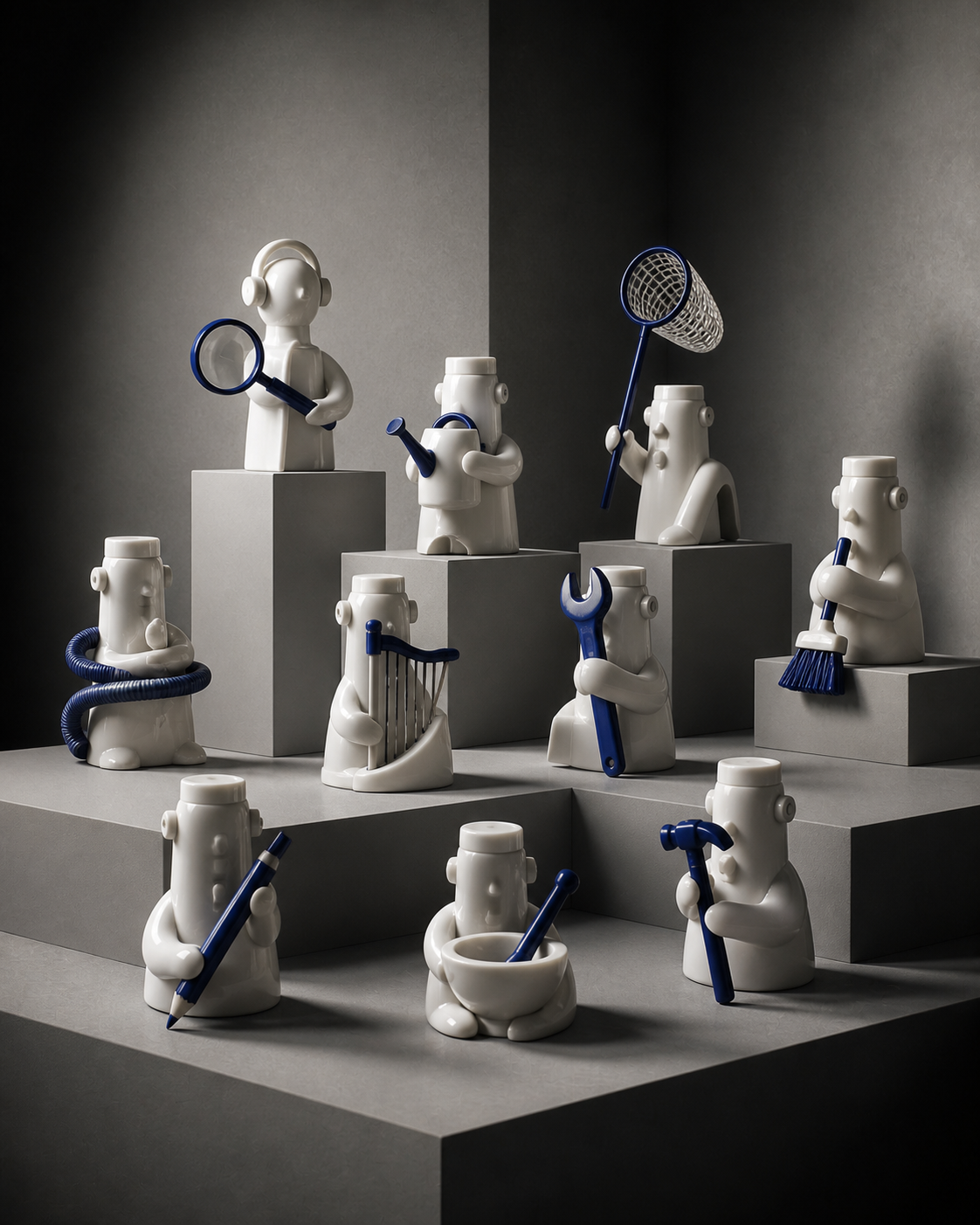
The library owns ten robots, none taller than a dining chair and none connected to a central intelligence. Their designer disliked the phrase “smart city.” A city, she said, should not need to be clever in order to be kind. She built machines for problems too modest to attract venture capital and too repetitive to remain harmless.
At nine fifteen, Mr. Vale arrives without his glasses. Scout rolls from beneath the returns desk and begins searching surfaces below shoulder height. It cannot identify faces, open drawers or infer where an absent-minded man ought to have looked. It examines the floor, chair seats and the broad leaves of the reading-room plants. The glasses are resting inside the hood of Mr. Vale’s coat. Scout cannot reach them, but it projects a small circle of light onto the fabric and waits for a human hand.
This limitation is not a defect hidden in documentation. Scout’s short neck is its promise made physical. It cannot watch a room, follow a person home or discover anything above the agreed horizon. Mr. Vale thanks it. The robot turns once, an unnecessary movement the librarians have decided means pleasure.
Before noon, the west door begins slamming in the wind. Hush attaches itself to the hinge and learns the weight of the door through three careful closures. It waits for trailing sleeves, shopping bags and the uncertain second step of the elderly. It does not lock, record or greet. When a child holds the door open for no reason, Hush makes no corrective sound. A friendly machine must distinguish danger from inconvenience and inconvenience from play.
Rain darkens the windows after lunch. The library becomes crowded with wet people and three frightened dogs. Hearth, the storm companion, unfolds a warm padded surface beneath a table. It monitors its own temperature, nothing else. It does not diagnose distress, dispense medicine or send reports to an owner. One dog sleeps against it. Another refuses. Hearth regards refusal as a complete instruction.
Near the skylight, Sol turns the potted citrus tree by four degrees. It follows the season slowly enough that nobody sees it move. The machine cannot water the plant. Its base contains no reservoir, only a blue mechanical gauge that tells the gardener when the soil has become light. Separating these abilities once seemed inefficient. Then the designers imagined a leaking sensor, an empty building and a robot authorized to keep pouring.
The afternoon brings more complicated work. Crumb travels beneath the long communal table, gathering food but leaving paper, insects and anything larger than a grape. Plainvoice reads difficult instruction sheets aloud in calm language, preserving warnings and refusing to simplify a step it cannot understand. Datekeeper patrols the shared refrigerator, turning older containers toward the front. It never declares food unsafe. It merely places a small paper clock beside whatever has been waiting longest.
Each machine ends at the edge of a human decision. That edge is visible: a handle, a flag, a light, a space where a hand must continue. Their usefulness depends less on artificial intelligence than on artificial restraint.
At five, a pipe leaks above the local-history shelves. The final three robots wake together. Drip places bowls beneath the water and changes their position as the ceiling stain travels. Page carries damp books to the sorting table one at a time. Patch brings the librarian cloth, tape, a wrench and then, after examining the pipe, a card bearing the telephone number of a licensed plumber.
Visitors laugh when Patch presents the card. They expected a machine with six polished arms to repair the building. Patch folds its arms into its body. It was designed to recognize the point where assistance becomes impersonation. The plumber knows pressure, corrosion, old walls and responsibility. Patch knows where the wrench is.
The tenth robot has done nothing all day. Pause sits beside the children’s corner with a broad white button on its back. Pressing it silences every library robot for sixty seconds. No alarm sounds. No administrator receives a notification. The machines simply stop where they are, leaving the room full of rain, pages and breathing.
A boy presses Pause before closing time. Tangle releases a cable. Sol leaves the citrus tree between directions. Hush allows the door to move under its own weight. For one minute, the library can feel the difference between help and obedience.
When the machines resume, nobody applauds. This seems to suit them. Friendliness was never added through round eyes, cheerful voices or the simulation of affection. It was built from legible limits, quiet competence and the right to say no on behalf of both machine and person. The ten robots do not wish to become human. Their gentlest quality is that they never ask humans to become machinery.